Ladle cars play a critical role in safely transporting molten metal across steel plants and foundries. Choosing the right ladle car requires careful evaluation of ladle car tonnage, drive type, and rail system design to ensure stability, efficiency, and long-term reliability. Every facility has different production conditions, transport distances, and load requirements. This guide explains how to select the right ladle transfer car capacity, compare common ladle car drive systems, and choose the most suitable rail infrastructure for your plant.
1. Choosing the Right Ladle Car Tonnage
Selecting the correct ladle car tonnage is the first step in building a safe transfer system. It determines how much molten metal the vehicle can move without stressing the structure or rails. Engineers often start by evaluating the weight of the ladle and its contents. From there, they adjust the capacity so the equipment handles daily operations comfortably. Plants often underestimate the total load. Molten metal adds huge weight. Refractory linings add even more. When capacity stays too close to the limit, parts wear faster and safety risks increase.
Understanding Load Capacity Requirements
A ladle transfer car must carry more than molten metal alone. It also supports the ladle shell, insulation layers, and sometimes slag residue. We calculate the total working load before choosing a model.
Important elements engineers evaluate include:
Weight of the empty ladle shell
Weight of molten steel or molten alloy
Additional refractory or insulation materials
Transport accessories or lifting attachments
Operational conditions also affect capacity decisions. Production rarely stays perfectly stable. Loads fluctuate during different batches. Temperature changes may alter structural stress. Engineers usually include a safety margin to prevent overload situations. Many plants add 20–30% extra capacity above the expected maximum load. It protects wheels, rails, and drive motors during heavy cycles.
Common Ladle Car Tonnage Options
Steel plants use several standard capacity ranges. Each one serves different production scales and facility layouts.
Small-Capacity Ladle Cars (10–50 Tons)
Small ladle cars operate in compact environments. They work well in research facilities, specialty alloy workshops, and smaller foundries. They often move metal between small furnaces and local pouring stations.
| Characteristic | Description |
| Compact rail systems | Designed for smaller production areas where space is limited |
| Lower power drive motors | Suitable for lighter loads and shorter transport routes |
| Short travel distances | Typically used between nearby furnaces and pouring stations |
| Flexible plant layouts | Easier to integrate into small workshops or pilot production lines |
Medium-Capacity Ladle Cars (60–150 Tons)
Medium-capacity models appear in many regional steel plants. They support routine furnace-to-caster transportation. They handle daily production without excessive mechanical stress.
| Feature | Description |
| Stronger structural frames | Reinforced steel structures designed to support medium to heavy molten metal loads. |
| More powerful electric drives | Higher-capacity motors provide stable traction for longer transport distances. |
| Improved braking systems | Advanced braking mechanisms ensure smooth and reliable stopping under heavy loads. |
| Greater thermal protection | Enhanced insulation and heat shields protect key components from extreme temperatures. |
Heavy-Duty Ladle Cars (200–500+ Tons)
Large integrated steel mills require extremely strong ladle transfer systems. Their ladles carry massive molten loads during continuous casting operations. These vehicles travel longer distances inside large production facilities.
| Feature | Description |
| Reinforced steel frames | Heavy structural frames designed to handle extremely large molten metal loads. |
| Multi-motor drive systems | Multiple drive motors provide stronger traction and improved reliability. |
| Advanced braking and stabilization features | High-performance braking systems help control movement and maintain ladle stability. |
| High-temperature insulation around key components | Thermal protection shields motors, wiring, and structural parts from intense heat. |
Ladle Car Capacity Comparison
| Ladle Car Type | Typical Capacity | Industrial Application |
| Small | 10–50 tons | Foundries, R&D facilities |
| Medium | 60–150 tons | Regional steel plants |
| Heavy-Duty | 200–500+ tons | Integrated steel mills |
Capacity selection depends heavily on plant scale and furnace output.
How to Calculate Required Tonnage
Engineers usually follow a simple step-by-step approach. The goal stays clear: determine the maximum possible load during real operations.
Key components in the calculation include:
Ladle weight
The empty ladle shell may weigh several tons depending on size.
Molten metal weight
Steel or alloy density determines this value.
Refractory lining weight
Thick insulation protects the ladle interior from heat damage.
Additional structural or accessory weight
Lifting hooks, support brackets, or monitoring devices add extra mass.
After calculating the full load, engineers apply a recommended safety factor. Many facilities increase the final capacity requirement by 20–30 percent. This protects equipment during peak production cycles. Applying a 25% safety margin leads to a recommended ladle car capacity near 175 tons.
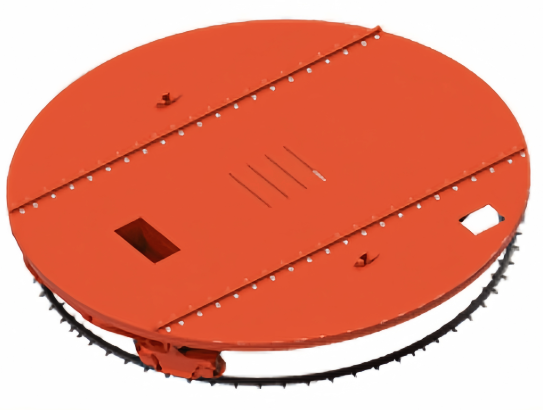
Platform Design Considerations
Ladle support design plays a big role in stability. A poorly designed platform may allow the ladle to shift during movement. Engineers usually rely on specialized support structures.
Common platform designs include:
Both designs reduce side movement. They also distribute weight more evenly across the chassis.
Structural reinforcement also plays an important role in the design of heavy-duty ladle cars. These vehicles often use reinforced steel frames to support extremely large loads during molten metal transport. Engineers also install load distribution beams to spread the weight evenly across the chassis and rail system, which helps reduce structural stress during movement. In addition, many components are made from heat-resistant structural materials so they can withstand constant exposure to high temperatures in steel plant environments.
Some facilities also require custom ladle cradles designed specifically for their ladle size and casting process. These cradles match the exact dimensions of the ladle base and provide stronger support during transport. This type of customization improves stability and reduces the risk of shifting when the car moves heavy molten loads across the plant.
2. Selecting the Right Ladle Car Drive Type
After determining the correct tonnage, the next decision involves the drive system of the ladle car. It controls how the vehicle moves, how power reaches the motor, and how efficiently the plant transports molten metal. Different drive types serve different operating environments. Some focus on stability and continuous production. Others focus on flexibility and automation. Plant engineers usually compare power supply, mobility, maintenance requirements, and infrastructure before choosing a drive solution.
Electric Rail-Driven Ladle Cars
Electric rail-driven ladle cars use external power delivered through rails, sliding contact lines, or cable systems. The car receives electricity directly from the plant power grid. Motors convert it into traction for movement along a fixed track. This design appears widely in traditional steel plants. Many continuous production lines rely on it.
Advantages
Stable power supply during long operations
Ideal for repetitive routes between furnaces and casting areas
Lower energy cost over long operating periods
Simple mechanical structure compared to battery systems
Limitations
Movement limited to installed rail routes
Requires rail construction and electrical infrastructure
Layout changes become difficult after installation
Battery-Powered Ladle Transfer Cars
Battery-powered ladle cars store energy inside onboard rechargeable batteries. Electric motors draw power directly from the battery pack instead of external cables. This design works well in plants requiring flexible routing or expanding production lines.
Advantages
High mobility across different areas of the plant
No trailing cables on the floor
Flexible routing across changing plant layouts
Zero emissions during operation
Limitations
Charging periods interrupt operation cycles
Battery packs require replacement after long service
Performance may drop under extremely heavy loads
Hydraulic Drive Ladle Cars
Hydraulic drive systems use pressurized fluid to power the movement mechanism. Pumps generate pressure. Hydraulic motors convert it into torque for the wheels. This configuration appears often in heavy-duty industrial environments where massive loads require strong driving force.
Advantages
Extremely high torque for heavy ladle transport
Stable performance under harsh industrial conditions
Strong lifting and positioning capability
Limitations
Hydraulic systems require regular maintenance
Fluid leaks may create safety concerns
Energy efficiency often lower than electric drives
Self-Propelled Ladle Transport Vehicles
Self-propelled vehicles operate without fixed rails. They move freely across plant floors or guided pathways. Navigation systems may include magnetic tracks, laser guidance, or embedded sensors. These vehicles appear in facilities where plant layouts change frequently.
Advantages
Flexible navigation across different routes
No fixed rail infrastructure required
Suitable for complex workshop environments
Limitations
Higher initial equipment investment
Advanced navigation technology required
More complex control systems
Automated or Remote-Controlled Ladle Cars
Modern plants increasingly adopt automated ladle transport systems. These vehicles operate through remote controllers, PLC systems, or centralized plant software. Operators control the vehicle from a safe distance. In advanced facilities, the system moves autonomously according to production schedules.
Advantages
Improved worker safety near high-temperature areas
Accurate positioning near furnaces and casting lines
Reduced manual labor in hazardous environments
Integration possible with plant monitoring systems
Limitations
Higher installation and system integration costs
Requires skilled technicians for operation and maintenance
Communication systems must remain stable in industrial environments
Ladle Car Drive Type Comparison
| Drive Type | Mobility | Power Source | Typical Application |
| Electric Rail-Driven | Fixed path | External electrical supply | Continuous steel production lines |
| Battery-Powered | Flexible | Rechargeable batteries | Plants requiring layout flexibility |
| Hydraulic Drive | Limited routes | Hydraulic pump systems | Heavy-load industrial environments |
| Self-Propelled | Free movement | Battery or hybrid | Large plants or complex layouts |
| Automated / Remote | Guided or autonomous | Electric systems | Smart factories and automated steel plants |
Each drive system changes how the ladle car interacts inside the production process. Engineers study plant layout, transport distance, load size, and automation level before selecting the best option.
3. Choosing the Right Rail System for Ladle Cars
The rail system is a critical part of any ladle car installation. It directly affects stability, safety, and transport efficiency in molten metal handling operations. Because ladle cars often carry extremely heavy loads at very high temperatures, the rail structure must support both mechanical stress and thermal exposure. Most steel plants choose between fixed rail systems and trackless transport systems depending on their plant layout and production workflow. Each option offers different advantages in terms of stability, flexibility, and infrastructure requirements.
Fixed Rail Systems
Fixed rail systems are the most traditional solution for ladle car transportation. In this configuration, ladle cars run on dedicated steel rails installed across the plant floor. These tracks guide the vehicle along a predefined path, which helps maintain stable movement during molten metal transport. This system is widely used in integrated steel plants where transport routes remain consistent for long periods. Since the path is fixed, operators can design highly efficient routes connecting blast furnaces, converters, and casting lines.
Benefits
High stability during transport of heavy molten metal
Lower deviation risk due to guided rail movement
Easier integration into automated production lines
Reliable operation under harsh industrial conditions
Typical Applications
Fixed rail ladle systems are commonly used for long-distance transport between major production areas, such as:
| Feature | Fixed Rail Ladle Car Systems |
| Movement Path | Predefined rail tracks |
| Load Stability | Very high |
| Automation Compatibility | Excellent |
| Layout Flexibility | Limited |
| Best Application | Long-distance molten metal transport |
Trackless Ladle Transport Systems
Some modern facilities prefer trackless ladle transport systems. These vehicles operate without fixed rails and rely on advanced navigation technologies to move across the plant. Instead of steel tracks, the vehicles follow guidance signals generated by sensors, magnetic strips, or laser positioning systems. The navigation system continuously monitors the vehicle position and adjusts movement in real time. This approach works well in plants where equipment layout may change or where multiple transport paths are required.
Benefits
Greater flexibility in plant layout design
Easier adaptation to changing production lines
No permanent rail infrastructure required
Suitable for complex workshop environments
Challenges
Trackless systems also introduce several technical considerations:
Navigation accuracy must remain extremely precise
Sensors must operate reliably in hot and dusty environments
Initial equipment investment tends to be higher
Advanced control systems are required for safe operation
| Feature | Trackless Ladle Transport Systems |
| Movement Path | Programmable navigation routes |
| Layout Flexibility | Very high |
| Infrastructure Requirement | Minimal rail installation |
| Navigation Technology | Sensors, magnetic strips, laser guidance |
| Initial Investment | Higher than rail systems |
FAQ: Ladle Car Selection and Design
How do I determine the correct ladle car capacity for my steel plant?
Start by calculating the total load the vehicle must carry. This includes the empty ladle weight, molten metal weight, refractory lining mass, and any additional attachments. Engineers usually add a safety margin of 20–30 percent to protect the structure, drive system, and rails during peak production conditions.
Which ladle car drive type is most commonly used in steel plants?
Electric rail-driven ladle cars remain the most common choice in many steel plants. They offer stable power supply, reliable traction, and lower operating costs during continuous production. These systems work best when the transport route stays fixed.
Are battery-powered ladle transfer cars suitable for heavy loads?
Battery-powered systems can handle moderate loads effectively, especially in flexible production environments. However, extremely heavy molten metal transport often favors electric rail-driven or hydraulic drive systems because they provide stronger continuous power.
When should a plant consider trackless ladle transport systems?
Trackless transport vehicles work well in facilities where layouts change frequently or where multiple transport paths are required. Plants expanding their production lines sometimes choose this solution because it avoids installing new rail infrastructure.
Conclusion
Selecting the right ladle car involves more than choosing a vehicle with enough capacity. Engineers must evaluate tonnage requirements, drive systems, rail structures, and plant layout to build a safe and efficient molten metal transport system. When these elements work together, ladle cars can move heavy loads smoothly while protecting equipment and workers.
If you are planning to upgrade your molten metal handling equipment, XinRuiJi International Trading Co., Ltd. offers professional solutions for ladle cars and industrial transport systems. Our team helps steel plants choose reliable configurations tailored to real production conditions. Feel free to contact us to explore customized ladle car designs that improve safety, efficiency, and long-term performance in your facility.

 English
 العربية
 Français
 Русский
 Español
 Português
 Deutsch
 italiano
 日本語
日本語 한국어
한국어 Nederlands
 Tiếng Việt
 ไทย
ไทย Polski
 Türkçe
 አማርኛ
አማርኛ ພາສາລາວ
 ភាសាខ្មែរ
 Bahasa Melayu
 ဗမာစာ
ဗမာစာ தமிழ்
தமிழ் Bahasa Indonesia
 magyar
 Română
 Čeština
 Монгол
 Filipino
 қазақ
қазақ Српски
 हिन्दी
 فارسی
فارسی Kiswahili
 Slovenčina
 Slovenščina
 Norsk
Norsk Svenska
 українська
 Ελληνικά
 Suomi
Suomi Հայերեն
 עברית
עברית Latine
 Dansk
Dansk اردو
اردو Shqip
Shqip বাংলা
বাংলা Hrvatski
 Afrikaans
 latviešu
 অসমীয়া
 Aymara


