Ladle cars are essential in steel plants, transporting molten metal safely and efficiently. Today, automation and intelligent control are transforming how these vehicles operate, combining AI, sensors, and real-time monitoring to improve precision and safety. Modern ladle cars reduce human risk, prevent metal quality issues, and streamline maintenance. In this article, we explore how advanced automation, predictive maintenance, and intelligent control technologies are reshaping ladle cars, helping steelmakers achieve safer, more efficient, and more sustainable operations every day.
Understanding Modern Ladle Cars
What is a Ladle Car?
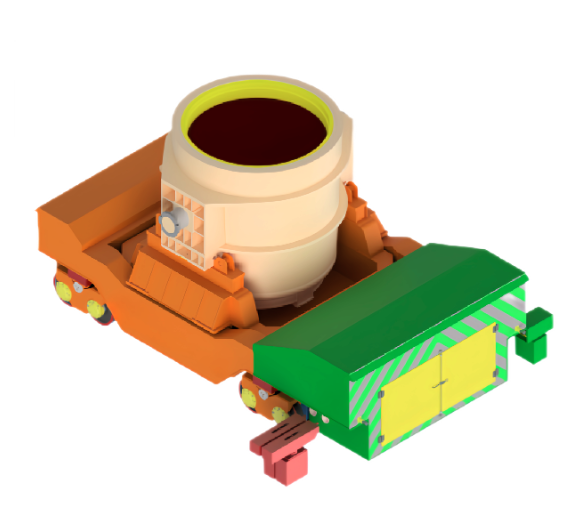
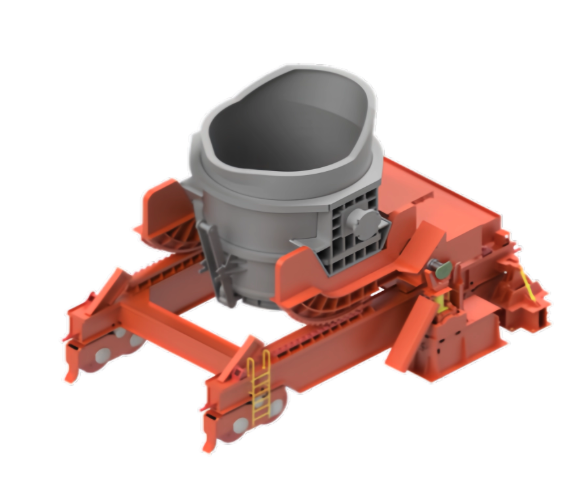
A ladle car is a specialized vehicle used to transport molten metal safely across steel plants. They carry liquid steel from the furnace to casting areas, helping maintain temperature and quality during transfer.
They consist of several key components:
Chassis: Provides stability and supports the ladle during movement.
Ladle: The container holding molten metal, usually made of heat-resistant steel.
Hydraulic Systems: Control tilting, lifting, and movement of the ladle.
Control Units: Operate the vehicle, monitor temperature, and manage safety features.
Tip: Modern ladle cars often integrate sensors to track temperature and tilt, ensuring the metal stays safe during transport.
| Component | Function | Notes |
| Chassis | Supports ladle and vehicle structure | Must handle extreme weight and heat |
| Ladle | Holds molten metal | Heat-resistant lining prevents wear |
| Hydraulic System | Lifts, tilts, moves ladle | Requires frequent maintenance |
| Control Unit | Operates car, monitors safety | Can include AI-based monitoring |
Common Challenges in Traditional Ladle Car Operations
Even with experienced operators, traditional ladle cars face several challenges:
Human Error in High-Temperature Environments: Operators work near molten metal, risking burns or accidents.
Safety Risks During Metal Transfer: Spills or tipping can damage equipment and cause injuries.
Maintenance Issues from Wear and Corrosion: High temperatures, molten metal splashes, and friction wear parts quickly.
Difficulty in Real-Time Monitoring: It is hard to check ladle condition or metal quality instantly, which may affect production.
They often rely on manual inspection, making it hard to prevent delays or catch problems early.
Automation in Ladle Car Systems
Why Automation is Necessary
Automation in ladle cars addresses many challenges operators face every day. By enhancing safety, it keeps workers away from extreme heat and molten metal, reducing the risk of injuries. At the same time, it improves efficiency and precision, as automated movements minimize delays and ensure accurate positioning of the ladle.
Real-time monitoring through sensors tracking temperature, tilt, and pressure helps prevent accidents and maintain consistent metal quality. This allows operators to focus on supervising the process instead of manually controlling every step, making operations smoother and more reliable.
Key Components of Automation
Modern ladle cars rely on several integrated components:
Sensors: Measure temperature, pressure, tilt, and position. They feed live data to control units.
Actuators: Hydraulic and electric systems adjust ladle movement accurately.
PLCs (Programmable Logic Controllers): Manage operations, process sensor data, and execute commands automatically.
Human-Machine Interface (HMI): Lets operators monitor the system, view alerts, and intervene if needed.
| Component | Role | Example Function |
| Sensor | Data input | Tracks ladle tilt, molten metal temperature |
| Actuator | Motion control | Lifts, tilts, or stops ladle precisely |
| PLC | System brain | Executes automation logic, error detection |
| HMI | Operator interface | Displays status, alarms, and controls |
Automated Operation Features
Automation adds smart features to ladle cars, making operations safer and more efficient:
Automated Travel and Positioning: Moves ladle between furnace and casting area accurately.
Temperature Control: Maintains molten metal within safe limits to reduce quality loss.
Collision Avoidance and Safety Interlocks: Prevents crashes and accidental tipping.
Real-Time Diagnostics: Monitors mechanical systems and metallurgical parameters continuously.
Tip: Combining sensors, PLCs, and HMIs lets operators respond instantly to abnormal conditions, even remotely.
Intelligent Control Technologies for Ladle Cars
What is Intelligent Control?
Intelligent control brings together AI, machine learning, and expert systems to make ladle cars smarter and more responsive. Through adaptive operations, it adjusts movements and speeds based on live sensor data, ensuring precise handling of molten metal. Predictive maintenance anticipates component wear, hydraulic issues, and potential failures before they occur, reducing downtime.
By analyzing both historical and real-time data, it enables data-driven decisions that optimize every aspect of operation. Essentially, intelligent control acts like a brain for the ladle car, allowing it to respond intelligently rather than just following pre-set instructions.
Applications of Artificial Intelligence in Ladle Cars
AI has multiple roles in modern ladle car management:
Neural Networks for Metallurgical Patterns: Identify microstructures, like ferrite-perlite ratios, in molten steel.
Predictive Analysis: Forecast ladle wear, temperature fluctuations, and corrosion risks.
Route and Schedule Optimization: Plans efficient travel paths and handling sequences in busy steel plants.
Case-Based Reasoning in Metal Grade Determination
Expert systems compare new metal data to historical cases stored in a database:
Consistency Checks: Ensure the molten metal transported meets quality standards.
Metal Grade Prediction: Combines chemical composition, temperature, and microstructure data to suggest grades.
Adaptive Learning: System improves recommendations as new cases are added over time.
| Feature | Function | Benefit |
| Case Database | Stores historical metal data | Enables fast comparison and prediction |
| Expert Rules | Evaluates quality parameters | Ensures consistent grade classification |
| Adaptive Updates | Learns from new cases | Improves future decision accuracy |
Benefits of Intelligent Control
Intelligent control delivers clear advantages for ladle cars and steel plants:
Reduced Manual Intervention: Operators monitor rather than manually control every step.
Lower Maintenance Costs: Predictive alerts prevent unexpected failures.
Extended Equipment Lifespan: Smooth operation reduces mechanical stress.
Enhanced Metal Quality: Continuous monitoring ensures consistent molten metal properties.
Safety and Maintenance in Automated Ladle Cars
Safety Protocols
Modern ladle cars include multiple safety layers to protect operators and equipment:
Automatic Shut-Off: Stops the system instantly during emergencies.
Overheating Detection: Sensors monitor ladle temperature constantly.
Structural Stress Monitoring: Detects strain in chassis or supports.
Misalignment Alerts: Prevents unsafe movement or tilting of the ladle.
Predictive Maintenance
AI enables smarter maintenance strategies for ladle cars:
Wear and Corrosion Forecasting: Predicts thinning of ladle walls or hydraulic component fatigue.
Data-Driven Scheduling: Maintenance occurs when needed, not just on fixed time intervals.
Resource Optimization: Reduces downtime and extends lifespan of components.
| Component | Monitoring Method | Prediction |
| Ladle Surface | Thermal & visual sensors | Corrosion and wear trends |
| Hydraulic System | Pressure & flow sensors | Potential leaks or failures |
| Chassis & Frame | Strain gauges | Structural fatigue |
Reducing Operational Risks
Automation minimizes operator exposure to dangerous conditions:
High-Temperature Hazards: Operators stay away from molten metal zones.
Collision Prevention: Proximity sensors and path planning avoid crashes.
Tipping & Spillage Protection: Tilt sensors and stabilizers maintain balance.
Continuous Monitoring: Real-time alerts help avoid accidents before they occur.
Automated systems make ladle car operation safer, while ensuring metal transfer remains precise.
Future Trends in Ladle Car Automation
Digital Twin Technology
Digital twins replicate ladle cars in virtual environments for testing and optimization.
Performance Simulation: Models ladle movement, tilting, and metal transfer.
Maintenance Planning: Predicts component wear and schedules repairs before failures.
Scenario Testing: Operators can test emergency responses or process changes virtually.
Advanced AI and IoT Integration
Next-generation ladle cars leverage AI and IoT for smarter steel plant operations:
Predictive Analytics: Forecasts bottlenecks, metal demand, and maintenance needs across the plant.
Smart System Integration: Ladle cars communicate with overall plant management platforms.
Adaptive Scheduling: Routes and priorities adjust automatically based on real-time production data.
| Feature | Function | Benefit |
| IoT Sensors | Track position, temperature, and load | Immediate alerts for anomalies |
| AI Algorithms | Analyze historical and real-time data | Optimize transfer efficiency |
| Cloud Dashboard | Centralized monitoring | Better coordination between production lines |
Sustainable and Energy-Efficient Operations
Automation in modern ladle cars increasingly focuses on reducing environmental impact while cutting operational costs. Intelligent routing allows the system to select the shortest and safest paths, lowering overall energy consumption. Thermal management maintains the ladle at optimal temperatures, which minimizes heat loss and ensures the metal remains stable during transport.
By optimizing operation, the lifespan of both the ladle and hydraulic systems is extended, reducing wear and maintenance needs. Additionally, continuous energy monitoring tracks consumption trends, helping plants improve overall efficiency and sustainability.
FAQ
Q: What is the difference between manual and automated ladle cars?
A: Manual ladle cars rely on operator control, exposing workers to high heat and human error. Automated ladle cars use sensors, PLCs, and actuators to move, monitor, and control molten metal safely and precisely.
Q: How does AI improve metal quality monitoring?
A: AI analyzes metallographic images and real-time sensor data, recognizing microstructures, detecting defects, and predicting chemical or structural inconsistencies to maintain consistent metal quality.
Q: Can intelligent ladle cars prevent corrosion and wear?
A: Yes. Predictive maintenance forecasts wear, hydraulic stress, and potential corrosion, enabling timely interventions that extend ladle lifespan and reduce downtime.
Q: What is the cost-benefit of implementing full automation?
A: Full automation reduces labor risks, improves precision, lowers maintenance costs, minimizes accidents, and increases throughput, often offsetting initial investment over time.
Conclusion
The evolution of ladle cars demonstrates how automation and intelligent control can revolutionize molten metal handling. By integrating AI, predictive maintenance, and energy-efficient operations, plants can boost safety, consistency, and productivity while lowering costs.
XinRuiJi International Trading Co., Ltd. offers cutting-edge solutions for modern ladle cars, helping steelmakers adopt smarter, more reliable systems. Whether improving operational efficiency or extending equipment lifespan, these technologies make a tangible difference on the shop floor.

 English
 العربية
 Français
 Русский
 Español
 Português
 Deutsch
 italiano
 日本語
日本語 한국어
한국어 Nederlands
 Tiếng Việt
 ไทย
ไทย Polski
 Türkçe
 አማርኛ
አማርኛ ພາສາລາວ
 ភាសាខ្មែរ
 Bahasa Melayu
 ဗမာစာ
ဗမာစာ தமிழ்
தமிழ் Bahasa Indonesia
 magyar
 Română
 Čeština
 Монгол
 Filipino
 қазақ
қазақ Српски
 हिन्दी
 فارسی
فارسی Kiswahili
 Slovenčina
 Slovenščina
 Norsk
Norsk Svenska
 українська
 Ελληνικά
 Suomi
Suomi Հայերեն
 עברית
עברית Latine
 Dansk
Dansk اردو
اردو Shqip
Shqip বাংলা
বাংলা Hrvatski
 Afrikaans
 latviešu
 অসমীয়া
 Aymara


