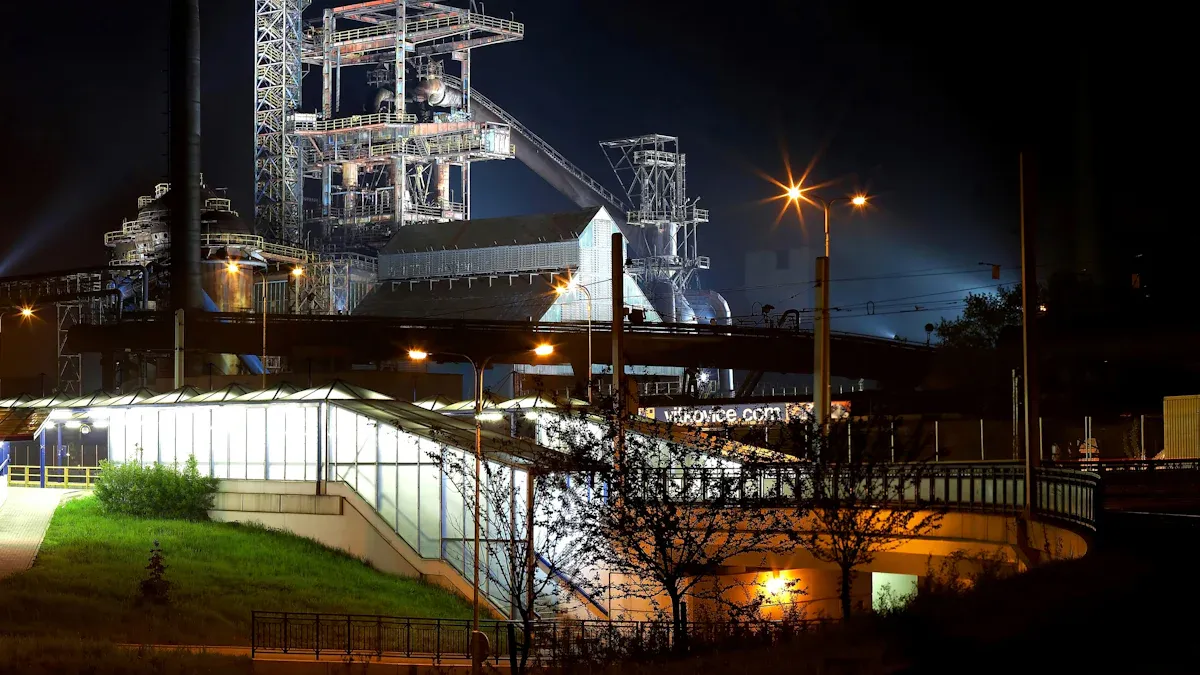
You see big changes in steel plants now. Automation is changing how ladle car operations work. Real-time monitoring lets you watch every move. High-speed ladle changes mean you wait less time. Integrated process coordination links every step together. These new things bring real benefits. You see fewer delays, better safety, and more work done. The newest numbers show up to 25% fewer equipment failures. There are about 40% fewer safety incidents. Downtime from ladle transfers drops by almost 30%.
Improvement Type | Statistic |
Reduction in equipment failures | Up to 25% |
Decrease in safety incidents | Around 40% |
Production downtime due to ladle transfers | Almost 30% |
Key Takeaways
Ladle car automation lowers equipment problems by up to 25%. This makes the plant more reliable.
Fast ladle changes mean workers wait only 30 seconds. This helps make steel faster and keeps workers safer.
Real-time monitoring and predictive maintenance spot problems early. This stops expensive breakdowns and keeps things running smoothly.
Integrated systems help ladle cars and cranes work together better. This cuts tap-to-tap time by 32% and boosts efficiency.
Using data and advanced analytics helps make better choices. This improves workflow and safety, so steel plants work better and cost less.
Automated Ladle Car Movement
Real-Time Positioning
Automation helps you move ladle cars exactly where needed. You can control the cars with more accuracy than before. Vision-based tracking systems help you place ladle cars better than people can. There are fewer mistakes and more correct moves.
The vision-based system is off by only 0.023 meters on average.
LiDAR-based methods are less accurate, with a 0.032 meter error.
The vision-based system is wrong just 0.9% of the time.
LiDAR-based methods are wrong 12.1% of the time.
You use live data to guide cranes and ladle cars. This helps stop mistakes and keeps things running well. When cranes use automation, they work better and have fewer delays.
High-Speed Ladle Changes
Automation lets you change ladles much faster. You can finish a ladle change in 30 seconds. This helps you make more steel quickly. Safety is better because you do not need to look as much. Workers feel less tired and pay more attention. Safety managers see fewer accidents happen.
Feature | Benefit |
Real-Time Tracking and Monitoring | Makes sure the hook is placed right and stops mistakes. |
Adaptive Zoom Technology | Keeps the hook clear to see, so workers are not distracted. |
Hook Hanging Position Confirmation Algorithm | Gives instant feedback about the load, making lifting safer. |
Load Monitoring | Stops overloading and damage by checking crane limits. |
Adaptation to Harsh Environments | Works well even in tough places, keeping things safe. |
You use tools like adaptive zoom and load monitoring. These help keep cranes safe and steady. Fully automated cranes work great in hard steel mill conditions.
Steel Mill Crane Operations Integration
You link ladle car automation with crane operations in the steel mill. This helps you handle repeated tasks better. Workers get less tired and make fewer mistakes. Remote controls let you choose the best view for each job. Anti-collision systems watch for danger and stop crashes. You have less downtime and get more work done.
Live charge tracking and crane interface keep each batch on track and tell the melt crew what is happening.
Auto-melt phase detection uses data to set the right time for tapping.
Tap readiness logic tells you when to tap, so you do not wait too long.
Cycle-based event logging tracks time and helps you spot slow spots.
Integrated dashboards show live data for everyone.
You make workflows and crane schedules better. You use anti-collision systems and train workers often to keep them safe. You save energy and money with smart maintenance. Automation and integration make steel mills safer and more productive. You get better safety, more work done, and higher efficiency.
Predictive Automation for Maintenance
Continuous Monitoring
Automation helps you watch every ladle car all the time. Sensors collect data from cranes and send it to computers. These computers check if each car is working well. You can find problems early, before they get worse. This lets you plan repairs and stop sudden breakdowns.
Key Point | Explanation |
Continuous Monitoring | Lets you gather and check data to see how things are working. |
Early Detection | Finds small problems before they turn into big ones. |
Cost Efficiency | Saves money on repairs and helps things run better. |
Thermal imaging helps you see which parts are wearing out. You know when to fix a ladle car. This keeps your plant safe and running smoothly.
Predictive Alerts
Automation gives you alerts so you can fix things early. Vibration analysis and thermal imaging help spot trouble fast. Vibration analysis can find if a crane part is worn out or not lined up right. Thermal imaging shows hot spots that could mean something is wrong. These alerts let you plan repairs when it is best for you. You do not have to wait for things to break.
Evidence Description | Impact on Ladle Car Breakdown Prevention |
Predictive maintenance cuts down on surprise breakdowns in steel plants. | Shows it works well to stop ladle car problems. |
Automated AI-based solutions find the exact spot where things might fail. | Lets you fix things on time and avoid breakdowns. |
AI-based predictive maintenance finds problems right away. | Stops big failures from happening to ladle cars. |
You use live data from cranes and anti-collision systems to keep things safe. This makes your steel plant safer and more dependable.
Boosting Efficiency and Productivity
Predictive automation helps steel mills work better and faster. You have fewer breakdowns and waste less time. Tracking and analytics can cut wasted work by half. You save money and your cranes last longer.
One steel company used AI to spot quality problems and saved $8 million in a year.
Predictive maintenance made machines more reliable and cut downtime.
Automation and anti-collision systems let you watch things in real time and check quality.
You get more work done and your team stays safer.
You can count on automated cranes and smart navigation to help your plant. Automation helps you make good choices and keeps your plant strong.
Process Coordination and Efficiency
Integrated Automation Systems
Integrated automation systems help your steel plant work better. These systems link ladle car operations with cranes and furnaces. You get updates right away about every move. You always know where each ladle is and what it carries. You also know when it needs to be fixed. The Ladle Tracking System (LTS) gives you this information. Intelligent shape recognition helps you see ladle profiles and stops false alarms. Temperature monitoring lets you spot changes fast and keeps things safe.
Feature | Description |
Ladle Tracking System (LTS) | Gives real-time data on ladle position, heat info, and maintenance needs. |
Intelligent Shape Recognition | Spots ladle profiles and ignores other objects to prevent mistakes. |
Temperature Monitoring | Uses thermal images to track heat and warn you about problems. |
You get smooth teamwork in your plant. This helps you follow good schedules and keep things moving. Cranes and ladle cars work together, so you do not have to wait. Your workflow stays steady.
Workflow Optimization
Automation makes your workflow better. Cranes and ladle cars share information for good timing. This helps you pour steel at the right time. You get less slag and better alloy mixes. Tap-to-tap time drops from 62 minutes to 42 minutes. That is a 32% drop. Electricity use per ton of steel goes down by 10%. You save energy and get more work done.
Metric | Before Optimization | After Optimization | Improvement |
Tap-to-tap time | 62 minutes | 42 minutes | 32% reduction |
Electricity consumption per ton | 420 kWh/ton | 377 kWh/ton | 10% reduction |
Caster speeds get faster and tapping delays go down. Many steel plants see caster speeds go up by 4-5% after automation. These changes help you use your resources better and make more steel.
Data-Driven Decisions
You can use data to make smart choices every day. Sensors and cameras help you keep the right temperature and mix in each ladle. Advanced control systems change flow rates and pouring angles for better results. You collect more data, so your steel stays clean and strong. Analytics tools like ABB Ability and iGATE help you track every step. AI and big data help you run cranes and spot problems early.
Many plants now have processes that are over 30% faster.
40% of companies make choices faster.
Robotic process automation and anti-collision systems help cut costs by 25%.
Fully automated cranes and anti-collision systems make things safer and easier to control.
You see more work done, better safety, and smoother teamwork in your plant. These tools help you work better and keep your steel plant ahead.
You can see how ladle car automation changes your plant. Real-time movement helps you work faster and safer. Predictive maintenance lets you fix things before they break. Process coordination means cranes and ladle cars work together. Cranes now use advanced tracking and digital systems. This makes every lift more exact. There are fewer mistakes and more work gets done. When cranes and ladle cars share information, you see better results. Case studies show automation in cranes helps steel plants make more steel. It also keeps workers safer. Experts say you should use strong cranes and smart controls. They also suggest making cranes fit your plant’s needs.
Recommendation | Description |
Robust Design | Cranes must handle heavy loads and tough conditions. |
Customization | Tailor cranes for your plant’s needs. |
Operational Efficiency | Use smart controls for better crane performance. |
Pilot projects with cranes show new ways to save energy. They also help make your plant safer. You can look at these projects to plan your next steps.
FAQ
What is an AGV and how does it help in steel plants?
An AGV is a robot vehicle that moves things like ladles. It does not need a driver. You use AGVs to carry heavy stuff safely. These vehicles follow set paths in the plant. They help stop accidents and cut down on delays.
How do remote control technologies improve ladle car safety?
You use remote controls to run ladle cars from far away. This keeps you out of hot or risky spots. You watch the work on screens. You can act fast if something goes wrong.
Can you use AGV systems with other technologies in steel plants?
Yes, you can link AGV systems with sensors and cameras. This helps you track where ladles are and check their temperature. You get better control and can find problems early.
How does data analytics and IoT integration help with AGV operations?
Data analytics and IoT let you collect and study info from AGVs. You see how well your system works. You use this data to plan fixes, improve routes, and make your plant work better.
Why do steel plants use remote monitoring for AGV fleets?
You use remote monitoring to watch AGV fleets from a control room. This lets you check each vehicle’s status and location. You can fix problems fast and keep your plant working well.

 English
 العربية
 Français
 Русский
 Español
 Português
 Deutsch
 italiano
 日本語
日本語 한국어
한국어 Nederlands
 Tiếng Việt
 ไทย
ไทย Polski
 Türkçe
 አማርኛ
አማርኛ ພາສາລາວ
 ភាសាខ្មែរ
 Bahasa Melayu
 ဗမာစာ
ဗမာစာ தமிழ்
தமிழ் Bahasa Indonesia
 magyar
 Română
 Čeština
 Монгол
 Filipino
 қазақ
қазақ Српски
 हिन्दी
 فارسی
فارسی Kiswahili
 Slovenčina
 Slovenščina
 Norsk
Norsk Svenska
 українська
 Ελληνικά
 Suomi
Suomi Հայերեն
 עברית
עברית Latine
 Dansk
Dansk اردو
اردو Shqip
Shqip বাংলা
বাংলা Hrvatski
 Afrikaans
 latviešu
 অসমীয়া
 Aymara